Aston Martin V8 Series 1
The beginning of the V8 era — performance, presence, and hand-built craftsmanship
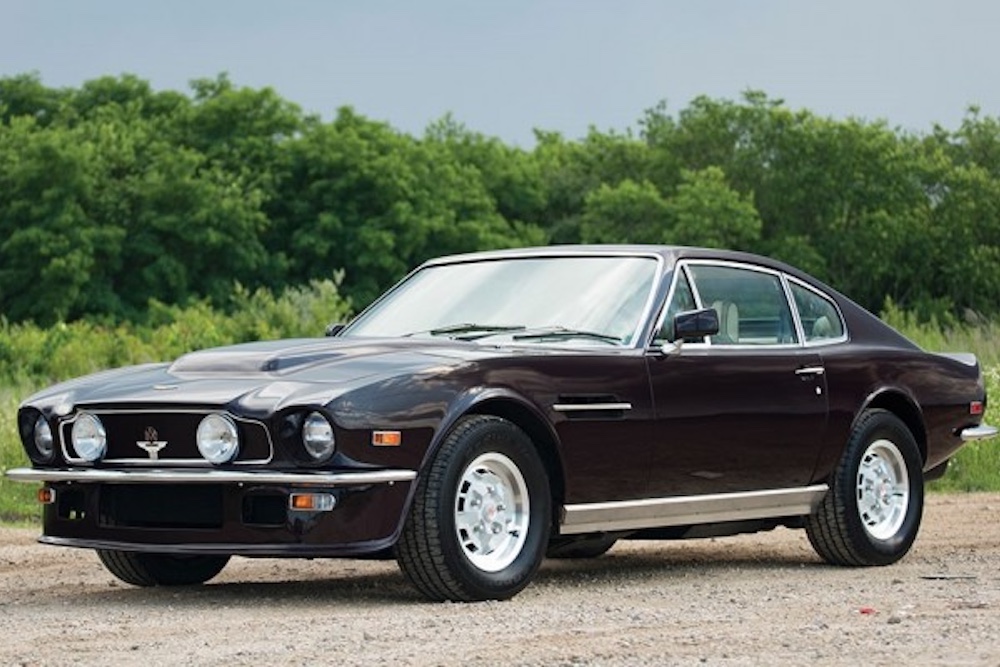
The V8 Series 1 appeared in 1972, at a time when the brand was turning the page on the “classic” DBs and seeking to modernize its image in the face of increasingly powerful Italian GTs. The direct successor to the DBS V8, it retained William Towns' sleek design but became the flagship of the range with its all-aluminum 5.3-liter V8 engine producing around 320 HP depending on the specifications, capable of exceeding 240 km/h while offering true grand touring comfort. Produced by hand in small series, this first version – sometimes referred to as the AM V8 Series 1 or Series 2 depending on the source, with Bosch fuel injection and a few tweaks to the grille and headlights – laid the foundations for the great line of Aston V8s that would remain in the catalog until the late 1980s.
Highlights
Technical sheet
- Layout: front-engine / rear-wheel drive
- Brakes: ventilated discs (front), solid discs (rear)
- Fuel tank: 82 L
- Steel chassis with independent front suspension
Services
V8 Series 2
Aston Martin V8 Series 2
Refined engineering — Bosch injection, improved cooling, and modernised GT character
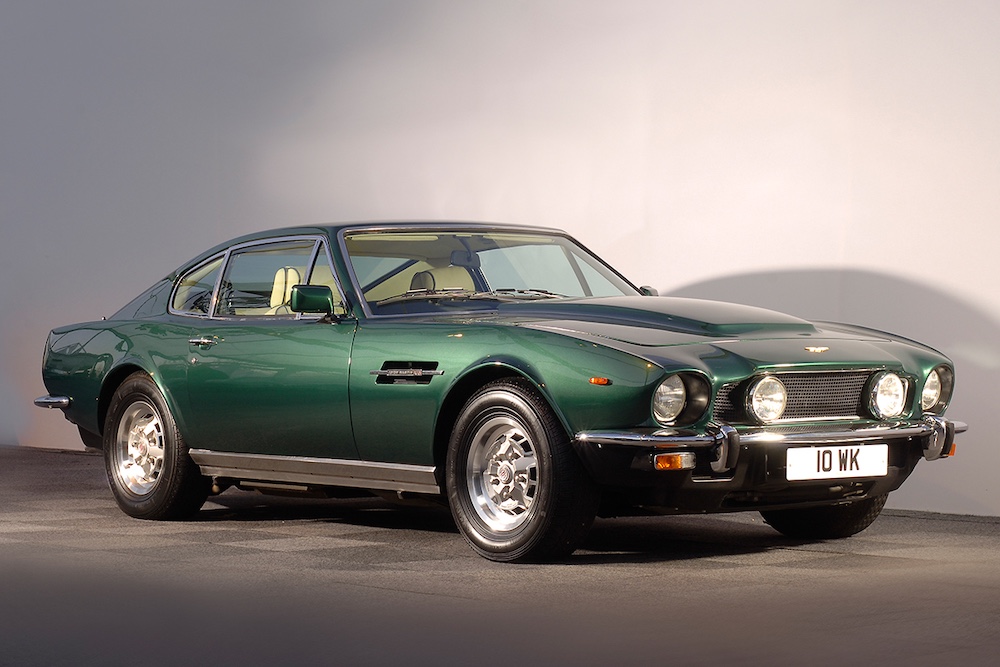
The V8 Series 2 arrived in the mid-1970s, amid an oil crisis that forced large GT cars to comply with stricter emissions standards without sacrificing the image of British muscle cars established by the Series 1. Compared to the first generation, the Series 2 featured styling changes (new grille, modified bumpers, hood and air intake details) and, most notably, the gradual replacement of Bosch fuel injection with carburetors, which affected the advertised power output depending on the market, while retaining the 5.3-liter V8 and high performance for the time, with a top speed of over 230 km/h and 0-100 km/h in less than 8 seconds. With only a few hundred units produced, this evolution consolidated the V8's role as the backbone of the Aston Martin range, before the arrival of the more refined Vantage versions, which took the concept of high-performance GTs even further.
V8 Series 3
Aston Martin V8 Series 3
Carbureted comeback — refined GT performance with classic Aston Martin character
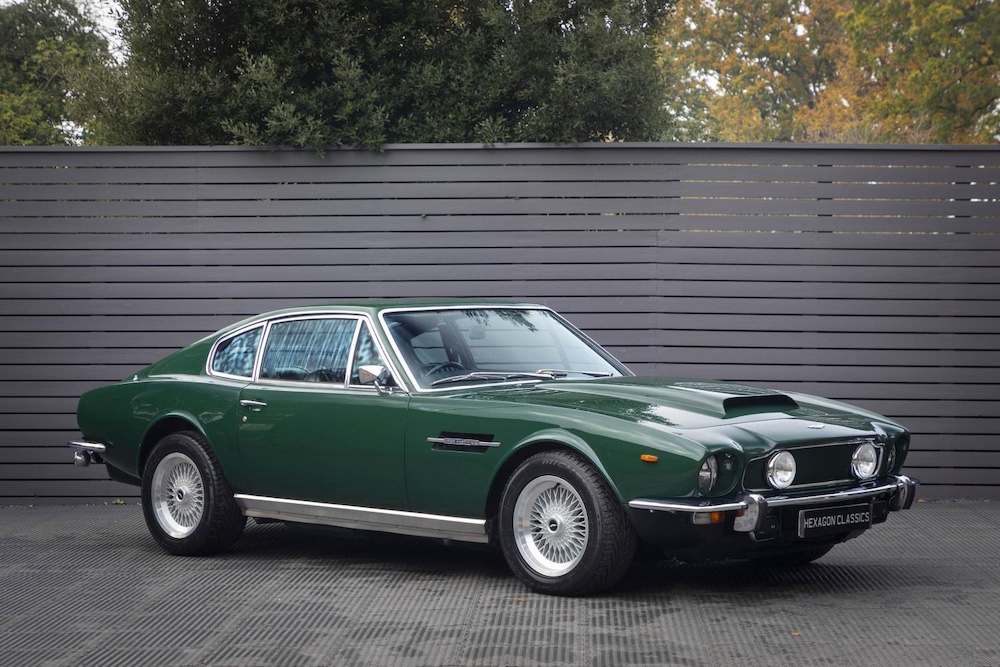
The V8 Series 3 marks the mid-1970s, when the brand had to contend with increasingly stringent emissions standards while preserving the character of the large V8-powered GT introduced at the beginning of the decade. Still powered by the 5.3-liter V8, the Series 3 featured a higher hood scoop and, most importantly, four twin-barrel Weber carburetors, delivering around 320 HP and very serious performance, with 0-100 km/h in around 6 seconds and a top speed of over 240 km/h depending on the transmission. Produced from 1973 to 1978 in less than 1,000 units, it consolidated the AM V8's “British muscle car” style, while paving the way for even more radical future Vantage models.
V8 Series 4
Aston Martin V8 Series 4 “Oscar India”
Elegant evolution — increased luxury, cleaner design, improved refinement
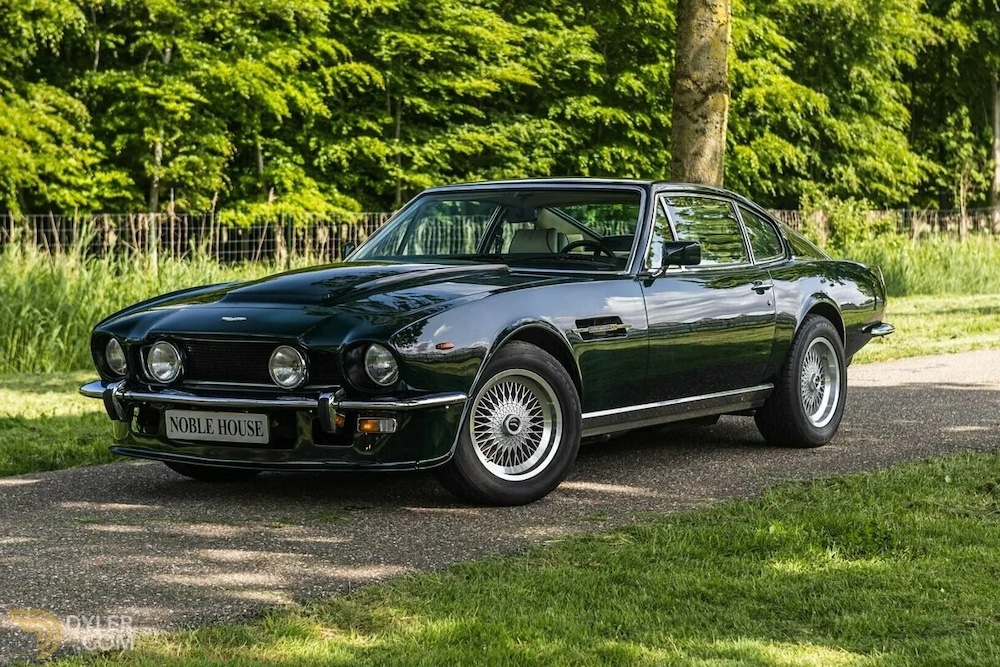
The V8 Series 4 – often nicknamed “Oscar India” (for OI, October 1978) – marked the transition of the V8 to a more luxurious, GT-style design, at a time when the oil crisis was coming to an end and Aston Martin was looking to move further upmarket. It is recognizable by its smooth hood with no visible air intakes, its “integrated spoiler” rear trunk, and a significantly more opulent interior with more wood and a revised finish. On the technical side, it retained the 5.3-liter V8 engine with around 300 hp depending on the configuration and market, offering performance that was still high for the time, while production remained very limited, making it a particularly sought-after variant among connoisseurs today.
V8 Series 5
Aston Martin V8 Series 5
Electronic fuel injection, refined mechanics, and the final evolution of the classic V8 GT
The V8 Series 5 also known as the V8 EFIis the latest evolution of the AM V8 from the 1980s, at a time when the brand was seeking to modernize its grand touring car to remain competitive with contemporary sports cars while retaining its “in-house” 5.3-liter V8 engine. This series featured Weber-Marelli electronic fuel injection on certain versions, a cleaner engine tune, and an even higher level of finish, with the V8 developing around 300 HP for consistently solid performance, with a top speed of around 240 km/h and 0–100 km/h in around 7 seconds depending on the transmission. Produced in very limited numbers, particularly in Volante form, the Series 5 symbolically ended the long career of the “classic” AM V8 and bridged the gap to the next generation of Astons in the 1990s.
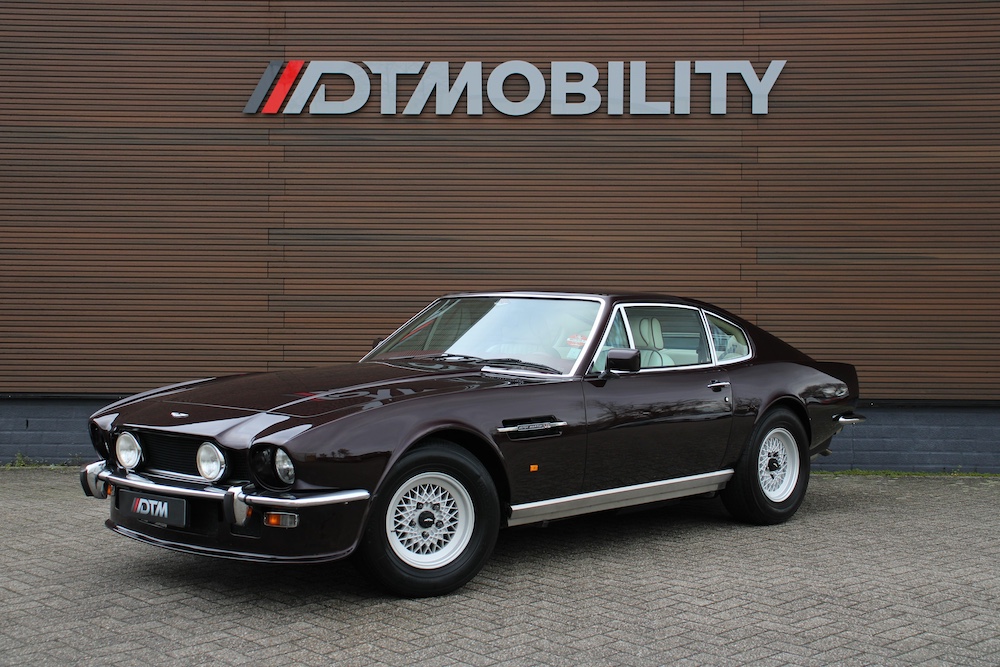
V8 Volante Series 1
Aston Martin V8 Volante Series 1
Elegant evolution — increased luxury, cleaner design, improved refinement
The V8 Volante Series 1 launched in the late 1970s, transposed the concept of the large V8 GT into a luxury convertible format, at a time when wealthy customers were looking for powerful but highly exclusive open-top cars. Based on the V8 “Oscar India,” it featured a 5.3-liter V8 powered by four Weber carburetors, delivering just over 300 HP and already very impressive performance despite structural reinforcement that added around 70 kg compared to the coupe, with a top speed of over 230 km/h depending on the transmission. Only a few hundred examples were produced between 1978 and the mid-1980s, and this first series of Volantes is now particularly sought after, both for its blend of British “wind-in-your-hair” muscle car and for its rarity on the classic Aston market.
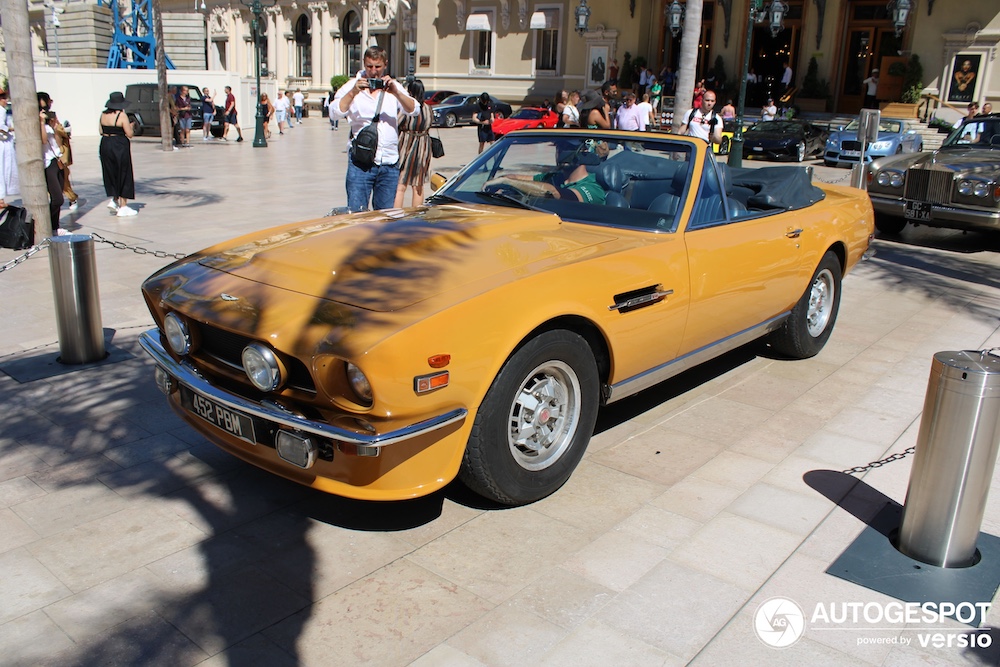
V8 Volante Series 2
Aston Martin V8 Volante Series 2
Electronic fuel injection, refined mechanics, and the final evolution of the classic V8 GT
The V8 Volante Series 2 appeared in the late 1980s, at a time when Aston was gradually modernizing its grand touring car while retaining the classic V8 architecture and ultra-luxurious positioning of the Volante. The Series 2 was based on the late AM V8 four-seater convertible, but with an updated look (redesigned bumpers, more integrated body details, an even more luxurious interior) and a 5.3-liter V8 engine producing around 300 HP depending on the configuration, most often paired with an automatic transmission for added comfort. Produced in very low volumes until the turn of the 1990s, this Volante Series 2 bridges the gap between the era of “classic” V8s and more modern Astons, making it a rare variant today, sought after for its very eighties-style open-top grand touring feel.
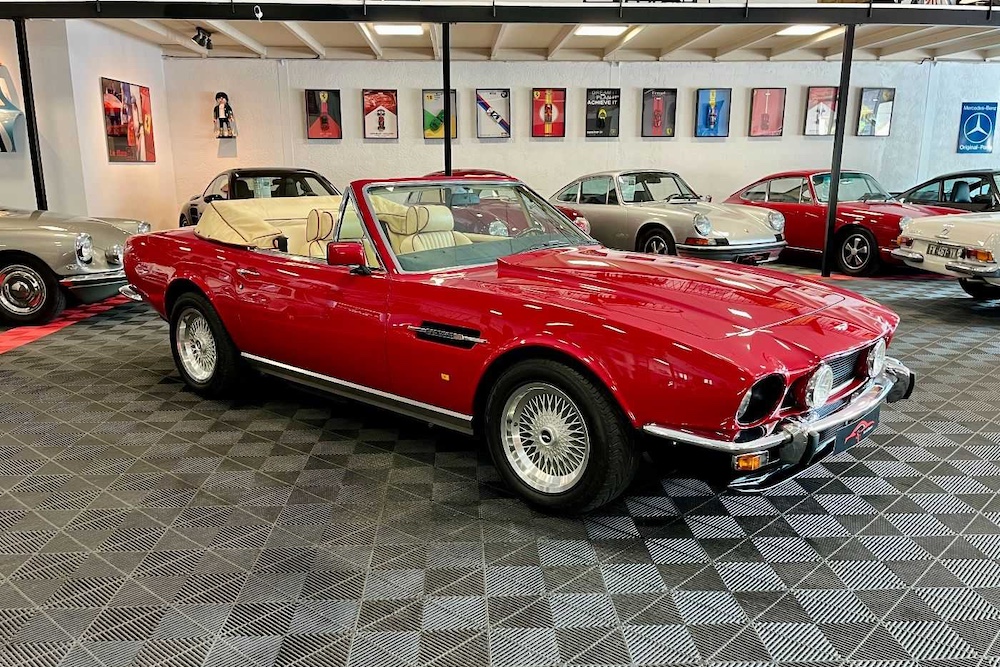
V8 Vantage Series 1
Aston Martin V8 Vantage Series 1
Britain’s first supercar — aggressive styling and high-performance V8 engineering
The V8 Vantage Series 1, unveiled in 1977, was born out of Aston Martin's desire to take on European supercars head-on—with Ferrari and Lamborghini in its sights—by transforming the AM V8 into a true high-performance sports car. It was fitted with a thoroughly reworked version of the Tadek Marek V8 engine, with four Weber carburetors, a higher compression ratio and specific tuning delivering around 390 HP depending on the source, enabling it to reach nearly 273 km/h and go from 0 to 100 km/h in around 5.5 seconds, figures that were among the fastest of its time. Externally, the Series 1 is recognizable by its full grille, imposing front spoiler, bulging hood, and rear wing, an aerodynamic package that also accompanies a reinforced and strengthened chassis to make this Vantage one of the wildest and most legendary Astons of the Newport Pagnell era.
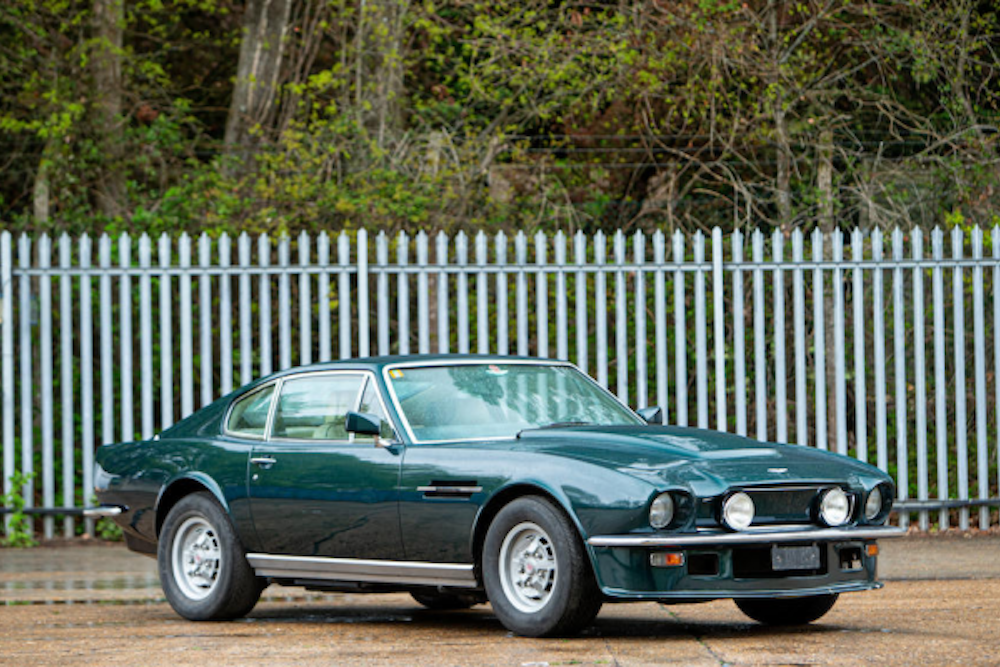
V8 Vantage Series 2
Aston Martin V8 Vantage Series 2
Refined performance — subtle upgrades, improved chassis and aerodynamic revisions
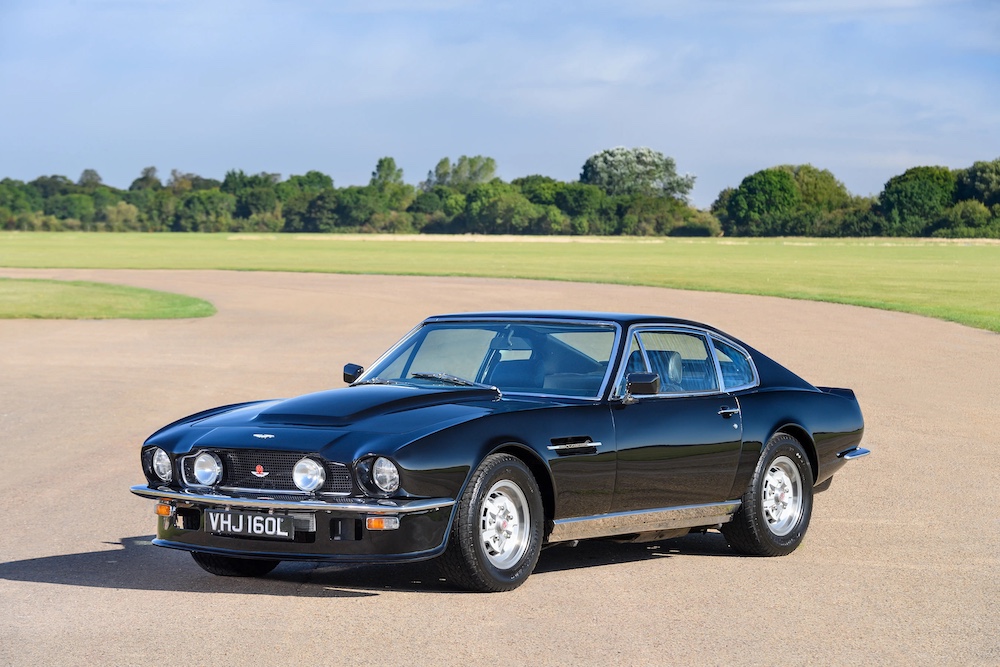
The V8 Vantage Series 2 appeared in the early 1980s, at a time when Aston was refining its super GT rather than revolutionizing it, capitalizing on the radical image of the first Vantage while updating it with subtle touches. Visually, the Series 2 retained its muscular look (full grille, front spoiler, rear wing), but gained more integrated details and a slightly modernized appearance, particularly in terms of the bumpers and finish. Technically, it remains faithful to the highly tuned 5.3-liter V8, still delivering around 380 HP for a top speed of approximately 270 km/h and 0-100 km/h in close to 5.5 seconds, but with revised comfort and reliability settings, making it a more mature, more accomplished version without losing the brutal character that has made the V8 Vantage's reputation.
V8 Vantage Volante
Aston Martin V8 Vantage Volante
Refined performance — subtle upgrades, improved chassis and aerodynamic revisions
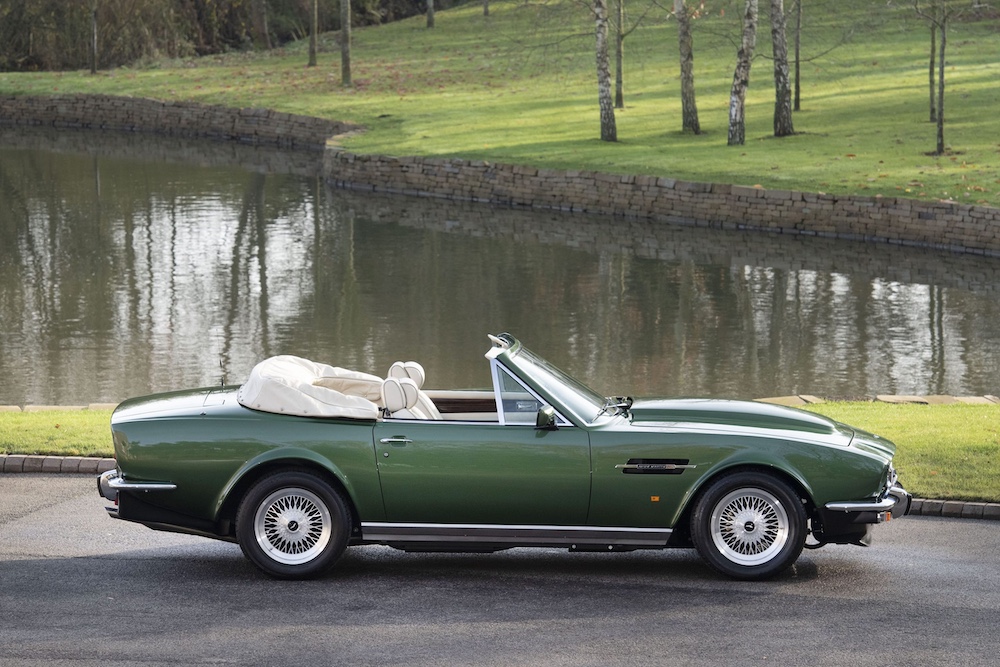
The V8 Vantage Volante represents the pinnacle of the AM V8 line from the 1980s, combining the luxury Volante convertible with the mechanics and ultra-muscular look of the Vantage, at a time when few convertibles offered such a high level of performance. Powered by a heavily tuned 5.3-liter V8 (Weber carburetors and Vantage specifications), it develops around 400 HP, allowing this heavy 2+2 convertible to deliver supercar performance, with 0–100 km/h in around 5.5 seconds and a top speed of over 257 km/h depending on the configuration. Visually, it follows the design cues of the V8 Vantage coupe—prominent front spoiler, fender flares, side skirts, integrated spoiler—while retaining the luxurious interior ambiance typical of Newport Pagnell, making it one of the most spectacular and sought-after classic Astons of its era.
V8 Vantage X-Pack
Aston Martin V8 Vantage X-Pack
Ultimate performance — uprated V8, bespoke bodywork and rarest Vantage specification
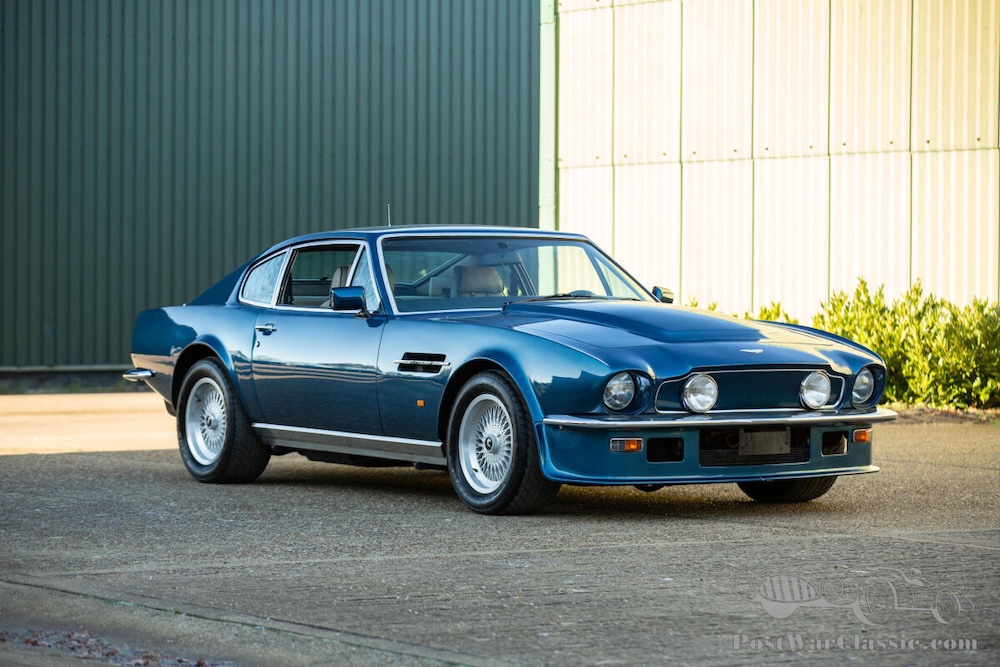
The V8 Vantage X-Pack represents the ultimate evolution of the 1980s V8 muscle car lineage, designed to offer an even more explosive version of the Vantage at the very end of its career. To stay in line with your paragraph structure, you could present it as a kind of “full-throttle” V8 Vantage, aimed at customers who wanted maximum performance while retaining the brutal, luxurious style of Newport Pagnell. Under the hood, the 5.3-liter V8 received a specific engine kit (high compression, reworked cylinder heads, optimized intake and exhaust) that boosted power to just over 430 HP depending on the configuration, with performance worthy of a supercar of the era, while remaining very rare in production, making it one of the most sought-after and legendary versions of the classic AM V8s today.
V8 Vantage Volante X-Pack
Aston Martin V8 Vantage Volante X-Pack
Ultimate performance — uprated V8, bespoke bodywork and rarest Vantage specification
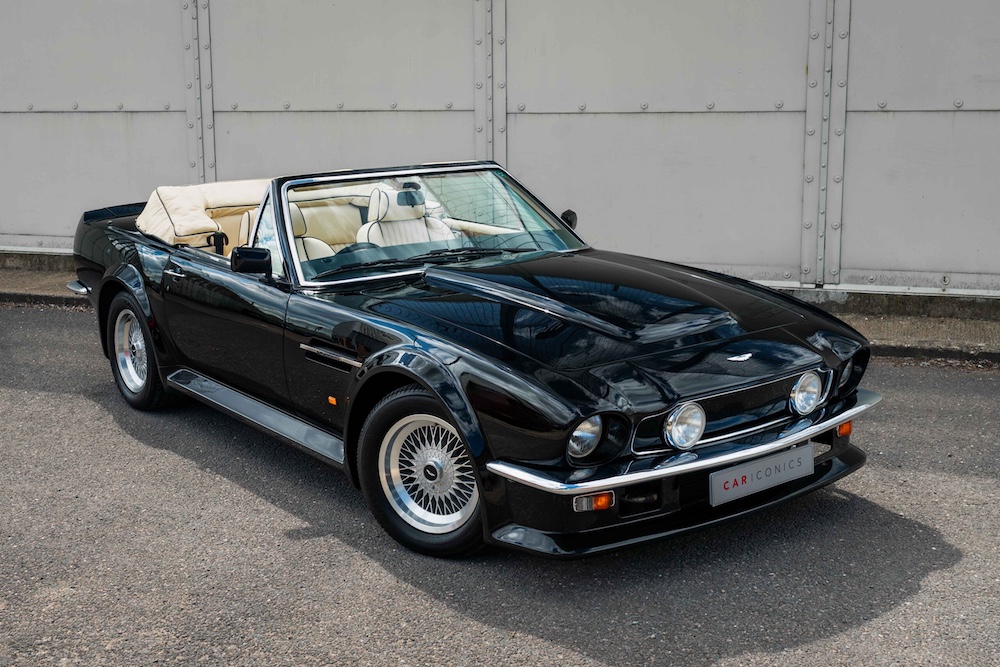
The V8 Vantage Volante X-Pack , produced at the very end of the 1980s, is the ultimate expression of the AM V8 “wind in your hair” concept, combining the Volante body with the engine and X-Pack performance kit previously reserved for the most radical Vantage models. In the context of the time, it was one of the most powerful convertibles on the market, with a heavily tuned 5.3-liter V8 producing over 430 HP, offering supercar performance despite the weight and structural reinforcements of the convertible. Very few examples were built, often with a particularly aggressive look (prominent front spoiler, fender flares, side skirts) and a high level of luxury on board, making it one of the rarest, most spectacular and most coveted classic Astons among collectors today.
V8 Vantage Volante Prince of Wales
Aston Martin V8 Vantage Volante Prince of Wales
Ultimate performance — uprated V8, bespoke bodywork and rarest Vantage specification
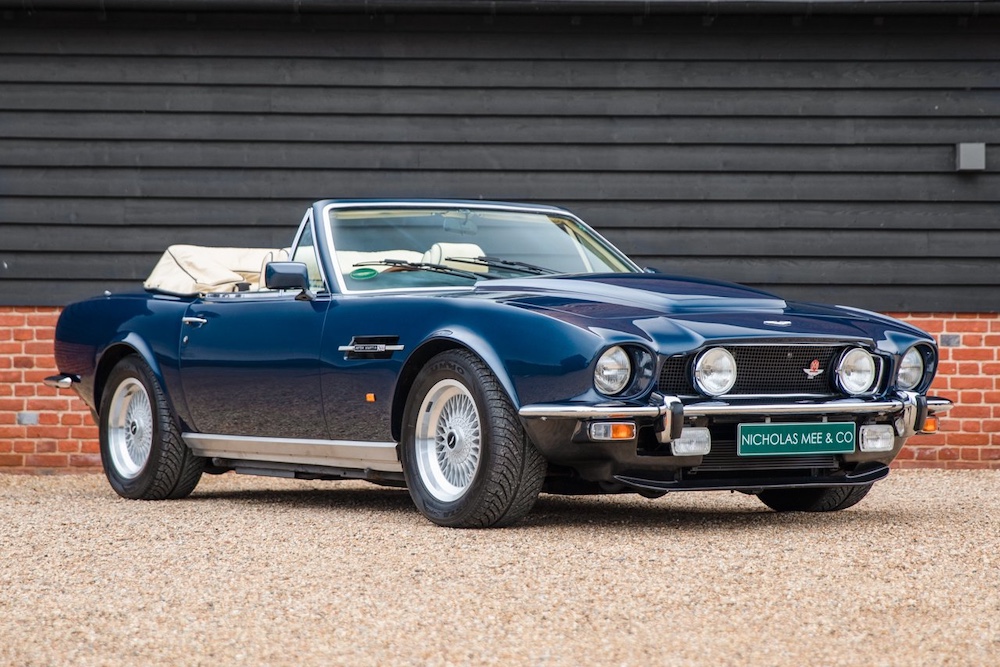
The V8 Vantage Volante Prince of Wales is a very special series created in the late 1980s at the request of the future King Charles III, who wanted a Volante that was more discreet than the classic body-built Vantage models. This version uses the chassis and tuned V8 engine of the V8 Vantage (around 430 HP depending on specifications) but without the fender flares or aggressive body kit, giving it a much more understated look closer to a “standard” V8 Volante. Produced in very small numbers for a handful of select customers, this configuration, combining Vantage performance with more classic elegance, is now one of the rarest, most expensive, and most sought-after variants in the entire AM V8 line.
V8 Vantage Zagato
Aston Martin V8 Vantage Zagato
Ultimate performance — uprated V8, bespoke bodywork and rarest Vantage specification
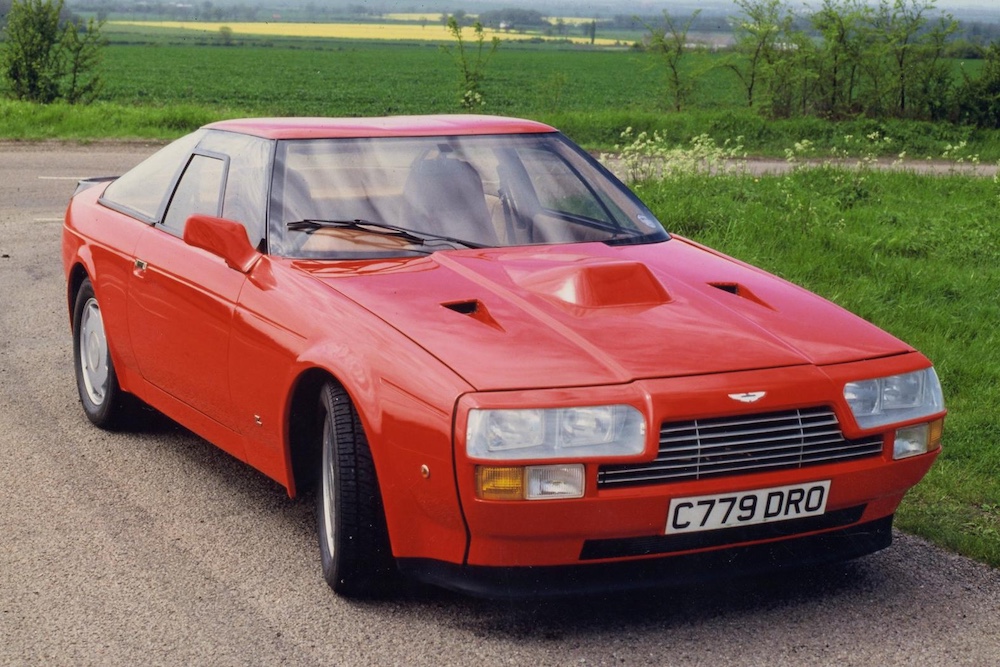
The V8 Vantage Zagato marked the return of the Aston Martin–Zagato partnership, with an ultra-limited series designed as a lighter, more compact, and even more exclusive interpretation of the V8 Vantage. Based on a shortened AM V8 chassis and clad in aluminum bodywork designed by Zagato, it stands out for its more compact size, its typically 80s angular lines, and its famous double roof hump. Under the hood is a heavily tuned version of the 5.3-liter V8, producing around 430 HP according to sources, offering top-notch performance for the time, especially as the car is significantly lighter than a “classic” Vantage. With only around 50–52 coupes produced, the V8 Vantage Zagato is now one of the rarest, most sophisticated, and most iconic Aston road cars of the Newport Pagnell era.
V8 Vantage Volante Zagato
Aston Martin V8 Vantage Volante Zagato
Ultimate performance — uprated V8, bespoke bodywork and rarest Vantage specification
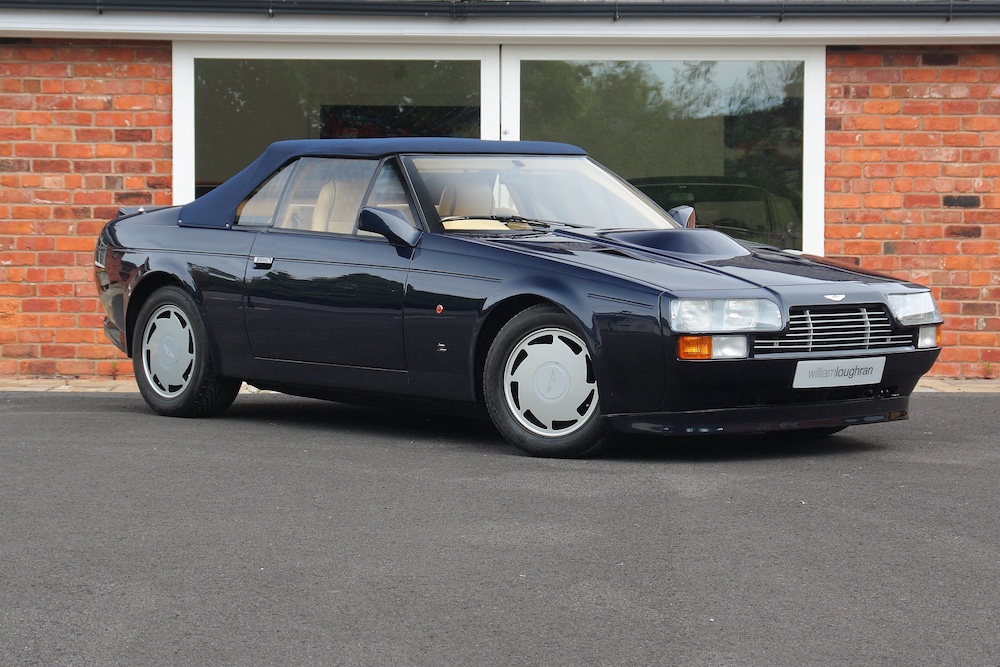
The V8 Vantage Volante Zagato is the ultra-exclusive convertible version of the late 1980s V8 Vantage Zagato, designed to combine the distinctive style of the Italian coachbuilder with the “wind-in-your-hair grand touring” experience so dear to Aston Martin. Based on the same 5.3-liter V8 architecture as the coupe, it is available in a range of power outputs (430 HP), while retaining the compact size, angular lines, and famous double roof hump, adapted here to the soft top. With only a few dozen examples produced between the late 1980s and early 1990s, this Volante Zagato is now one of the rarest and most spectacular classic Astons, a cross between a British GT and a very 1980s Italian design.
You cannot copy content of this page
